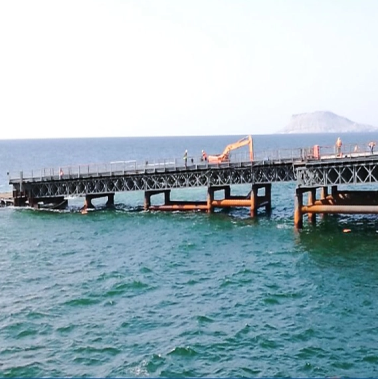
Truss Bridges: Timeless Structures of Strength and Efficiency
Truss bridges stand as a cornerstone of civil engineering, celebrated for their exceptional strength, efficiency, and adaptability across centuries. Defined by their rigid framework of interconnected triangular units—known as trusses—these bridges distribute weight evenly across the structure, making them ideal for spanning both short and long distances while using materials economically. This innovative design has made truss bridges a popular choice for everything from rural footbridges to major highway crossings.
At the heart of a truss bridge’s functionality is the triangular truss system. Unlike solid beams that bear weight through their entire structure, trusses use straight steel, wood, or concrete members (called chords, verticals, and diagonals) joined at nodes. The triangular shape is key: it resists bending and spreading under load, transferring forces like tension and compression to the bridge’s supports (piers or abutments) rather than concentrating stress on single points. This design not only maximizes strength but also minimizes material use—truss bridges are often lighter than solid-beam bridges of the same span, reducing construction costs and environmental impact.
Truss bridges come in various types, each tailored to specific needs. The simple Warren truss, with its repeating equilateral triangles, is common for pedestrian and light-vehicle bridges. The Pratt truss, featuring vertical compression members and diagonal tension members, excels at supporting heavy loads, making it a top choice for railroad bridges. The Howe truss, with reversed diagonal and vertical roles, was historically popular for wooden bridges in rural areas. Modern truss bridges often use steel, as it offers superior durability and can span longer distances—some steel truss bridges stretch over 1,000 meters, connecting cities and crossing large rivers.
Beyond functionality, truss bridges often hold cultural significance. Many historic truss bridges, like the iconic Brooklyn Bridge (a hybrid suspension-truss design), are landmarks that reflect the engineering ingenuity of their era. Today, they remain relevant: in urban areas, they support busy highways; in remote regions, they provide reliable access to communities; and in industrial settings, they carry heavy machinery.
With their blend of timeless design and practicality, truss bridges continue to prove their worth. They demonstrate how smart structural engineering can create long-lasting, cost-effective solutions that stand strong against the test of time and use.
Basic Info.
Project cases
 Company instruction
 Jiangsu Zhonghai Bridge Equipment Co., Ltd.(code 652268)
Brief instruction:
Location: No. 83, Dantu New City Section, Speech Highway, Dantu District, Zhenjiang, Jiangsu, China
registered capital:55 million yuan
production capacity:60000 tons/year
Standard: GB, ASTM, DIN, JIS, AISI, BS, SGS, BV
Dimensions: standard / customized
Length : from 9.144m to 60.96m ( / customized )
Material: Steel
Steel Grade: Q355B/Q460C or Equivalent
Application: temporary bridge, platform, gantry frame, headframe ,the construction of the tower, float bridge and so on
Transport Package: Packing in Containers or Bulk
Advantage:Proven Robotic Welding,good welding quality and precise size
Workshop
 Welding Machine
 Certificates

 Warehousing and shipping
 Packing and Transporting
 FAQ
FAQ
01.Which countries do you export to? Our company's products have been exported to dozens of countries and regions. Including:, Malaysia, PhilippinesNepal,Canada, Russia, Mozambique, Cambodia, Laos, Vietnam, Myanmar., Papua New Guinea, Solomon lslands,Kenya, Tanzania,Zambia, Congo,Tajikistan, Georgia, etc. 02.Are you a factory or a trade company ?
We are an industry and trade company.With a strong background of a registered capital of up to 55 million yuan,the company has a production capacity of over 60000 tons per year. In the East China region, we have successfullypositioned ourselves as a professional manufacturing giant for large Bailey pieces and prefabricated highwaysteel bridges.The company has its own import and export rights, with 20 years of export business experience. 03.Do you accept custom processing?
Yes, our company has an efficient and flexible technical team, we can process custom-made a variety ofnon-standard Bailey bridge, steel bridge, steel structure. 04.Can your company meet American standards? Yes, our products not only meet the AASHT0 American standard, but also meet the British BS5400, AustraliaAS5100 and other international standards. 05.Which airport is the nearest to your company?
Can l visit your company anytime?
The nearest airport is Shanghai Pudong lnternational Airport. You can visit our company anytime, our companywill issue an invitation letter and arrange to pick you up according to your needs. Your transportation andaccommodation during your visit to our company will be arranged by our company. 06.Could you send me some hard copies of your catalogues? Sure. Please send us your address and contact information and we will send it to you by international express assoon as possible. 07.Can we be your agent or distributor?
Our company is recruiting powerful partners all over the world for common development and win-win . Lookforward to long-term cooperation with you! 08.How soon can l receive your reply after l send you my inquiry? We will give professional and technical feedback within 6 hours after receiving your inquiry . After communicatethe technical parameters,we will provide quotation and preliminary design within 24 hours.